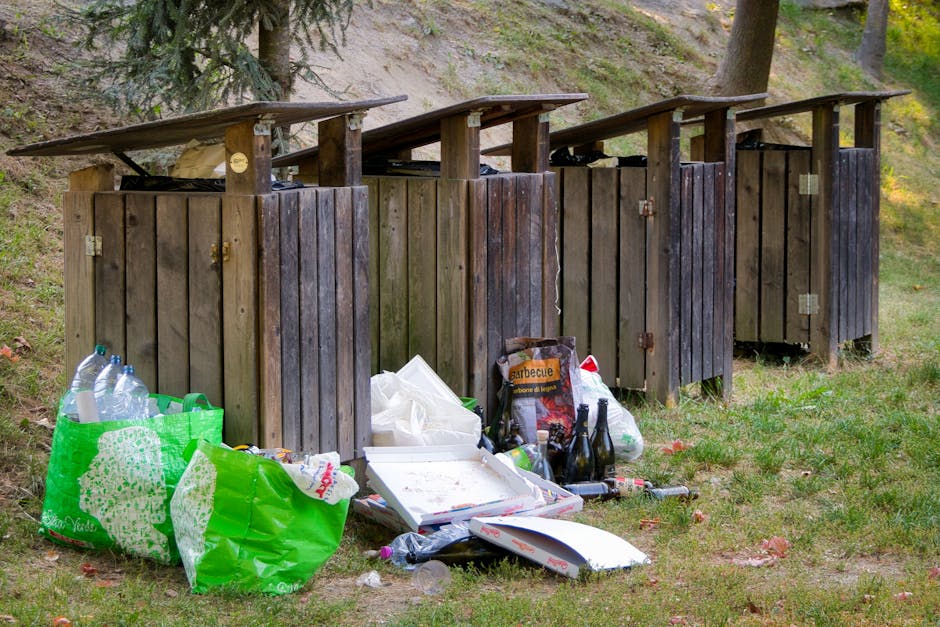
What to know about access issues for Hampstead rubbish collection
If you have ever tried to get bulky waste out of a tight Hampstead street, you will know the problem is rarely the rubbish itself. It is the access. A narrow mews, parked cars, basement steps, shared entrances, or a collector that cannot stop safely for long enough - any one of those can turn a straightforward clearance into a frustrating morning. This guide on What to know about access issues for Hampstead rubbish collection breaks the process down in plain English, so you can plan properly, avoid delays, and choose the right service for the job.
Hampstead is a lovely part of London, but it is not exactly built for easy waste movements. Older homes, mixed-use buildings, steep drives, and busy residential roads all create small logistical headaches. The good news? Most access issues can be managed with a bit of forethought. In the sections below, you will find a practical explanation of how access affects collection, what to check before booking, where problems usually appear, and how to reduce the risk of failed visits or extra cost. A bit of planning goes a long way here.
Contents
- Why access matters for Hampstead rubbish collection
- How access issues are handled in practice
- Key benefits of planning access properly
- Who needs this and when it makes sense
- Step-by-step guidance
- Expert tips for better results
- Common mistakes to avoid
- Tools, resources and recommendations
- Law, compliance, standards and best practice
- Options and comparison table
- Case study or real-world example
- Practical checklist
- Conclusion
- Frequently asked questions
Why access matters for Hampstead rubbish collection
Access is the difference between a smooth collection and a job that drags on, costs more, or needs rescheduling. In Hampstead, that matters more than in many other areas because the local street pattern often mixes historic layouts with modern traffic pressure. You may have a wide front door but no space for a vehicle to wait. Or a property may be easy to reach on foot but awkward for lifting heavy items down stairs. That is access in the real world: not just whether a van can get nearby, but whether the whole collection can be carried out safely and efficiently.
Why does this matter so much? Because waste collection is not only about loading items. It involves parking, carrying distance, turning space, item size, building layout, and timing. If any of those pieces are off, the job can take longer than expected. Sometimes it is a small issue - a couple of large bags placed too far from the entrance. Sometimes it is a bigger one, like a basement flat with a very narrow stairwell and no lift. Let's face it, rubbish does not politely sort itself into easy shapes.
For residents, landlords, managing agents, and business owners, poor access can lead to delays, extra labour, or the need for a different removal method. For the crew on site, it can affect safety too. Heavy lifting through awkward spaces is hard work, especially in older Hampstead buildings where hallways can be tight and surfaces uneven. Good access planning helps keep everyone safer and keeps the collection moving.
Practical takeaway: if the property looks awkward for a delivery driver, it will probably be awkward for a rubbish team as well. The earlier you describe the access clearly, the better the outcome tends to be.
How access issues are handled in practice
Most rubbish collection services handle access issues in a fairly simple way: they assess what is likely to be involved, plan the vehicle and crew accordingly, and then decide whether the collection can happen kerbside, from inside the property, or from a more suitable pick-up point. In practice, that means they will want to know what the route looks like from the item's location to the van. Not in a dramatic, inspection-by-candlelight kind of way. Just enough detail to avoid surprises.
Here is the sort of information that usually matters:
- How far the items are from the road or loading point
- Whether there are stairs, lifts, or ramps
- Whether parking is available close by
- Whether the property is in a mews, basement flat, or shared building
- Whether the items are bulky, fragile, heavy, or awkwardly shaped
- Whether access is through a communal hallway, rear garden, or side passage
In some cases, a team may ask for photos. That is not fussiness. It helps them estimate the likely labour involved and decide whether one crew member, two crew members, or a different vehicle setup is needed. A quick phone description can be fine for simple collections, but photos can save a lot of guesswork. You know the kind of thing - the stairs that look fine until you actually try to turn a sofa on the landing.
It also helps to separate access for the vehicle from access for the lifting team. They are not always the same thing. A street might be perfectly reachable for a van, yet the item itself may still be a problem because it has to move through a tight internal corridor. Conversely, items may be easy to bring out, but the van may need to park a short walk away. Both affect the service.
If you are arranging a wider clearance, services such as waste removal or house clearance often become a better fit when access is complicated, because the job can be planned as a full-site collection rather than a simple kerbside uplift.
Key benefits and practical advantages
Planning around access is not just about avoiding hassle. It gives you real practical advantages, especially in a place like Hampstead where buildings and streets can be a bit old-school in the best and most inconvenient sense of the word.
1. Fewer failed collections
If the crew arrives and cannot safely reach the items or park near enough, the collection may need to be postponed. Clear access details reduce that risk. Nobody enjoys the "we are here, but we cannot actually get to it" situation. It feels a bit absurd, and yet it happens more often than people expect.
2. More accurate quotes
Access affects labour time, vehicle choice, and sometimes the need for extra staff. When you describe access clearly, you are more likely to receive a realistic quote rather than a best-guess number that changes later. If you want to avoid awkward surprises, this is the place to be precise.
3. Safer lifting and handling
Heavy or awkward items need proper handling. Good access planning makes it easier to use trolleys, carry items in safer positions, and avoid pushing things through spaces that are too tight. That matters for both the crew and the property.
4. Less disruption to neighbours
Hampstead streets can be busy, and the last thing anyone wants is a van blocking a narrow road while someone reshuffles a mattress through a doorway. Proper planning helps keep collections quick and respectful, particularly in shared blocks or on roads with little spare room.
5. Better choice of service
Once you understand the access, you can decide whether you need a smaller team, a full property clearance, or a specialist collection for bulky or difficult items. That leads to a better fit, rather than forcing the wrong service to do the job.
Good access planning is not about making the job sound easy. It is about making it doable, safely and without the usual last-minute scramble.
Who this is for and when it makes sense
This topic matters to more people than you might think. Access issues can affect a single item pick-up, a full house clearance, or a recurring business waste collection. If you live or work in Hampstead, there is a good chance you will run into at least one awkward access situation at some point.
It is especially useful for:
- Homeowners in terrace, basement, or period properties
- Tenants moving out of flats with narrow stairwells or communal entrances
- Landlords arranging end-of-tenancy clearances
- Office managers dealing with desk, chair, and archive removal
- Shop owners with rear access only or tight loading windows
- Builders and contractors removing rubble or mixed waste from sites with limited frontage
- Families clearing lofts, garages, or garden spaces with poor access routes
It also matters when you are dealing with time pressure. Maybe the lease handover is tomorrow. Maybe there is a refurbishment starting on Monday morning. Maybe the council or building manager has set strict collection windows. In those moments, access is not a minor detail - it is the whole game.
If your property is difficult to navigate, services like flat clearance, office clearance, or builders waste clearance may be better matched than a simple one-item pickup, because they are typically set up for more complex site conditions.
Step-by-step guidance
If you want a smooth collection, the best approach is simple: assess the route, describe the issue clearly, and prepare the space before the team arrives. Nothing fancy. Just the kind of organised, slightly boring planning that saves a lot of headache later.
Step 1: Walk the route from item to vehicle
Start at the item and follow the exact path it will need to take. Look for tight corners, door widths, low ceilings, steps, uneven paving, and obstacles like planters, bicycles, bins, or shared furniture. If you are moving something from a back room, check the route all the way out to the street. Sometimes the issue is not the front door at all - it is the sharp turn by the hallway radiator or the narrow gate at the rear.
Step 2: Measure or estimate the tricky parts
You do not need surveyor-level precision, but rough measurements help. A basic tape measure can tell you whether a wardrobe, fridge, or sofa is likely to fit through a doorway or stair landing. If the item has detachable parts, note that too. A little practical detail goes a long way.
Step 3: Check parking and loading options
Think about where a vehicle can stop safely and legally. In some parts of Hampstead, parking is the biggest access issue of all. If loading has to happen from further away, say so in advance. That allows the service to plan crew numbers and time properly.
Step 4: Describe the building type
One of the quickest ways to help the provider is to describe the property clearly. Say whether it is a basement flat, top-floor flat, mews house, office suite, shop, or converted period property. Each type creates different access challenges, and that context matters.
Step 5: Share photos if requested
A couple of photos can help a lot. Take them in daylight if you can. Try to show the item, the route, any stairs, and the exit point. That way, the team can see the practical challenge rather than just hearing about it in words. This is especially useful for bulkier items, such as wardrobes, white goods, or old sofas.
Step 6: Clear the route before arrival
Move smaller obstacles out of the way in advance. Open gates. Unlock shared entrances. Make sure pets are secured. If a lift is available, check whether it is working and big enough for the item. A ten-minute tidy-up can shave a surprising amount of time off the job.
Step 7: Confirm timing and contact details
In narrow streets or managed buildings, timing can matter as much as the route. If the access window is short, make sure the provider knows it. Keep your phone nearby in case the crew needs directions or a quick answer on arrival. Honestly, this part sounds basic, but it is often what keeps the whole thing moving.
Expert tips for better results
After enough removals, a few patterns become obvious. The smooth jobs are rarely the ones with the fanciest planning. They are the ones where the person booking the collection gives specific, honest information early on. That is the real trick.
Be honest about how awkward the access is
It is tempting to say "it should be fine" when you are not completely sure. But "should be fine" is where surprises begin. If the stairwell is tight, say so. If parking is a bit messy, say that too. The goal is not to sound difficult. The goal is to avoid a wasted visit.
Think in terms of movement, not just location
People often describe where the item is, but not how it moves. A sofa in a second-floor flat is not the same as a sofa in a second-floor flat with a bendy staircase and a sharp landing. The movement path is what matters.
Use broad, plain descriptions
"Very narrow stairs," "no lift," "rear access only," "short parking window," and "two sets of steps" are the kind of phrases that actually help. Fancy wording is not needed. Plain English wins here.
Check building rules in advance
Managed blocks sometimes have collection rules, booking slots, or requirements about protecting communal areas. If there is a concierge or building manager, it is worth checking what they need before the collection day. Saves a lot of back-and-forth.
Group items logically
If you are clearing more than one room, keep items together and separate anything fragile, hazardous, or reusable. That makes the collection faster and reduces the chance of mix-ups. A little order at the start can save half an hour later. Maybe more.
Match the service to the access
For bigger or more awkward jobs, the right service matters. A specialist team is often better for internal removals, while a more flexible clearance option may be better where items must be removed from several floors or from behind a property. If you know access is the main issue, do not assume every collection option is equally suitable.
Common mistakes to avoid
Most access problems are avoidable. The common mistakes are usually small, but they have a habit of causing big delays.
- Underexplaining the access route: Saying a property is "easy enough" is not the same as describing the stairs, gates, or parking reality.
- Forgetting about internal obstacles: Doorways, corridors, tight turns, and stair landings can matter more than the front path.
- Not checking parking restrictions: A van cannot unload safely if it has nowhere to stop.
- Leaving items scattered around the property: If the crew has to search, sort, and lift at the same time, the job becomes slower.
- Ignoring lift size or lift availability: A lift is only useful if it works, is accessible, and is big enough for the item.
- Booking the wrong type of service: A simple pickup may not suit a property with multiple access hurdles.
- Assuming the team will "figure it out": They often can, but that usually takes more time and may affect the cost.
There is also one more mistake that sounds harmless but causes chaos: leaving the collection instructions until the last minute. By then, everyone is guessing. And guesswork is not a great logistics strategy, to be fair.
Tools, resources and recommendations
You do not need specialist equipment to manage access better, but a few simple tools and habits help a lot.
Helpful tools
- Tape measure: Useful for checking door widths, stair landings, and item dimensions.
- Phone camera: Good photos can explain more than a long message.
- Notebook or notes app: Handy for listing obstacles, item sizes, and building instructions.
- Gloves and sensible footwear: Especially useful if you are moving smaller items yourself before the crew arrives.
- Labels or tape: Helpful when separating what is going, what is staying, and what needs special handling.
Practical recommendations
If the access is genuinely tight, build in a little extra time. Five or ten minutes of margin can make a big difference, especially in Hampstead where traffic, parking, and school-run movement can all pile up at once. Early morning is often calmer than mid-afternoon, though of course that depends on the street and the day. You will notice the difference more on roads near busy hubs or shared residential areas.
If the job involves furniture, mixed household waste, or a combination of heavy items, it may help to use a more specific service rather than treating everything as generic rubbish. For example, furniture clearance, mattress and sofa disposal, or fridge and appliance removal may provide a better fit depending on the item type and route.
When to ask for a site-specific quote
If there is any doubt about access, a site-specific quote is often the safest choice. That does not have to mean a complicated survey. Sometimes a few photos, a short description, and a quick call are enough. The point is to avoid pricing a difficult collection like an easy one. That rarely ends well.
Law, compliance, standards and best practice
Access planning is partly a customer service issue, but it is also a safety and compliance issue. In the UK, waste removal and collection should be carried out with proper care, especially where lifting, transport, and handling could affect workers, residents, or the public. You do not need to become an expert in regulations to book a collection, but it helps to understand the basic expectations.
Best practice usually includes:
- Safe manual handling for heavy or awkward items
- Reasonable assessment of vehicle access and loading conditions
- Clear communication about any special risks or obstacles
- Protection of communal areas and property during removal
- Separation of hazardous materials from general waste where required
If the collection includes items such as chemicals, paint, certain electrical components, or other potentially risky materials, they need to be handled separately. Services dealing with hazardous waste disposal should only be used where the material is appropriate for that route and the provider is clear about what they can and cannot take. Do not guess. If in doubt, ask first.
It is also sensible to think about insurance and property protection. Tight hallways, shared entrances, and staircases can be vulnerable to scuffs or knocks if items are forced through too quickly. Providers should have appropriate safety procedures in place, and you should be able to discuss those openly. If a company cannot explain its approach in plain language, that is a bit of a red flag.
For businesses, there may be additional expectations around confidentiality, safe storage of waste, and responsible disposal routes. If documents or files are involved, confidential shredding is worth considering rather than treating paper as ordinary rubbish. Not all waste is equal, and the route matters.
Options, methods, or comparison table
There is no single "best" access solution for every Hampstead collection. The right method depends on the layout, the item type, and how much help is needed on site. The table below gives a practical comparison.
| Collection method | Best for | Access strengths | Possible limitations |
|---|---|---|---|
| Kerbside collection | Items already near the road | Quick if parking is easy and items are ready to load | Poor fit for basement flats, long carry distances, or gated properties |
| Inside-property clearance | Flats, houses, and offices with awkward internal routes | Handles stairs, corridors, and room-to-room movement | Needs clearer planning and may take longer |
| Partial access collection | When a vehicle can stop nearby but not directly outside | Useful where loading is possible with a short carry | Extra labour may be needed |
| Full clearance service | End-of-tenancy, house moves, office clearances, or renovation waste | Flexible for complex routes and multiple item types | Usually needs more detailed briefing |
For many Hampstead homes, a full clearance style approach is the most realistic if access is difficult. That can be especially true for lofts, basements, and properties with narrow staircases. If you are dealing with clutter, large furniture, or mixed waste, it can also be worth exploring loft clearance, garage clearance, or home clearance depending on where the waste is coming from.
For anyone comparing options, a useful question is: What is the least risky way to get the items from where they are now to where they need to go? That is usually the real decision. Everything else flows from there.
Case study or real-world example
Picture a basement flat in Hampstead with a narrow staircase, a small front hall, and no lift. The resident needs to remove an old sofa, a coffee table, and several bags of mixed household items before a tenancy ends. On paper, it sounds simple. In practice, the sofa is the awkward bit. It will turn at the bottom step, but only just, and parking outside is tight because the road is busy at school-run time.
Now compare two approaches. In the first, the resident says only that the items are "ready to go." The crew arrives, realises the sofa cannot be rushed down the stairs without risk, and has to spend extra time manoeuvring. The collection still happens, but it takes longer than planned and creates stress for everyone.
In the second approach, the resident sends photos of the stairs, explains the parking situation, and mentions the basement layout in advance. The team brings the right number of people, plans for a slightly longer loading time, and schedules the visit for a quieter window. The job is still physical. It is still a bit sweaty, truth be told. But it happens cleanly, with fewer surprises and less pressure.
That is the real lesson with access issues: the waste does not usually change, but the way you plan for it absolutely does.
Practical checklist
Use this checklist before booking a collection in Hampstead. It keeps the conversation focused and helps avoid missed details.
- Have I walked the full route from item to vehicle?
- Are there stairs, tight turns, or low ceilings?
- Is parking available close enough for safe loading?
- Do I need to mention a basement, loft, or top-floor flat?
- Are any items unusually heavy, fragile, or oversized?
- Have I checked lift access, if relevant?
- Are there any building rules, permits, or timing restrictions?
- Have I removed small obstacles from the route?
- Have I taken photos if the access is not straightforward?
- Do I need a more specific service such as furniture, office, or builders waste clearance?
If you can tick most of those boxes, you are already ahead of the curve. Not perfect. Just properly prepared. And that is usually enough.
Conclusion
Access issues for Hampstead rubbish collection are common, but they are rarely a dead end. With the right information, careful planning, and a realistic view of the property layout, most collections can be handled safely and without unnecessary stress. The key is to think beyond the rubbish itself and focus on the route, the parking, the lifting, and the timing.
Whether you are clearing a flat, an office, a house, or a one-off bulky item, clear communication is your best tool. Describe the access honestly, share photos if needed, and choose a service that matches the space you actually have, not the space you wish you had. That small bit of preparation can save time, money, and a fair amount of hassle.
Get a free quote today and see how much you can save.
And if the street feels tight or the stairs look unforgiving, take it one step at a time. Most of the time, there is a way through it.
Frequently Asked Questions
What counts as an access issue for rubbish collection in Hampstead?
An access issue is anything that makes it harder for the collection team to reach the items or load them safely. That can include narrow streets, parking restrictions, stairs, basements, tight hallways, shared entrances, or long carry distances from the property to the vehicle.
Do I need to mention access problems when I book?
Yes, absolutely. If the collection provider knows about access challenges in advance, they can plan the right vehicle, crew size, and timing. That usually leads to a smoother visit and a more accurate quote.
Will a narrow Hampstead street stop a collection from happening?
Not always. Many collections can still go ahead if the items can be reached safely on foot or if the vehicle can park nearby, even if not directly outside. The important part is being honest about the route so the team can judge it properly.
What if my flat is on an upper floor with no lift?
That is a common access challenge, and it can often be managed. The main things to explain are the number of flights, the width of the staircase, and whether the items are bulky or heavy. Photos can help if the route is especially tight.
Can access issues change the price?
They can, because extra labour, longer loading time, or special handling may be needed. The aim is not to charge for the sake of it, but to price the work accurately based on the real conditions.
Should I move items outside before the crew arrives?
Only if it is safe and practical to do so. If moving items outside helps, that can reduce handling time. But do not block pavements, entrances, or shared areas, and do not move heavy items on your own if there is any risk of injury.
What details are most useful to give about access?
The most useful details are stairs, parking, lift access, tight corners, doorway width, building type, and whether the items are easy to reach or tucked away in a loft, basement, or rear room. Photos are very helpful too.
Are access problems different for business waste collection?
Often, yes. Business premises may have loading bays, security checks, narrow service entrances, or timed access windows. Office buildings and shops can be straightforward in some ways and awkward in others, so it helps to explain the exact layout early on.
What happens if the team cannot access the items on the day?
That depends on the provider and the reason access failed, but it can lead to a wasted visit or a need to reschedule. Clear communication beforehand is the best way to avoid that situation.
Is it better to choose a clearance service for difficult access?
Often, yes. If the property has multiple floors, awkward stairs, or a lot of mixed waste, a more flexible clearance service is usually a better fit than a simple kerbside pickup.
Do I need photos if I already explained the problem?
Not always, but they can be very useful. Photos give a quick visual sense of the space and reduce guesswork. For tricky access, they are usually worth sending.
How far in advance should I plan a collection with access issues?
As early as you reasonably can, especially if parking or building access is limited. Even a short lead time can help, but more notice gives the provider a better chance to plan properly and avoid delays.
What should I do if I am not sure whether access is a problem?
Describe it anyway. A quick photo set and a plain-language explanation are usually enough for the provider to say whether the job looks straightforward or needs extra planning. When in doubt, over-explain slightly. It is better than guessing.
Can access issues affect safety as well as convenience?
Yes. Tight corridors, steep stairs, poor lighting, and awkward lifting angles can all increase the chance of damage or injury. That is why access planning is not just a customer service detail; it is part of safe waste handling.
What is the simplest way to prepare for a tricky collection?
Walk the route, clear obstacles, take photos, and tell the provider exactly what makes access difficult. That simple routine solves more problems than people expect, honestly.